PTI Reaffirms Sohail Afridi as KP Chief Minister Amid Internal Party Differences.
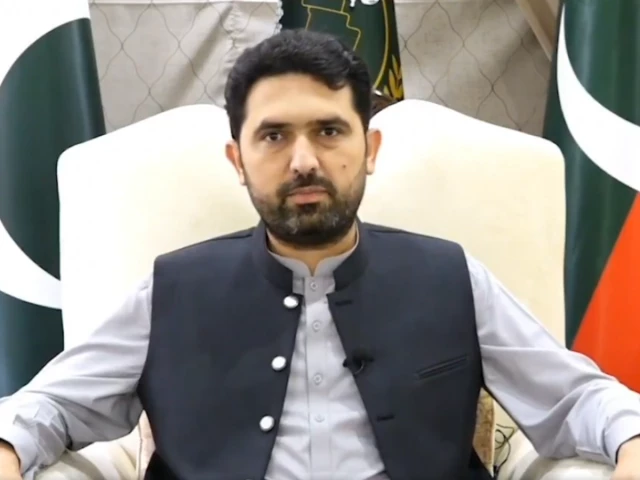
Pakistan Tehreek-e-Insaf (PTI) has reaffirmed its support for Sohail Afridi as its Khyber Pakhtunkhwa chief minister, seeking to end speculation about a possible replacement amid growing disagreements within the party.
In a notification issued on Thursday, October 29, PTI Chairman Barrister Gohar Ali Khan stated that Afridi would continue to hold the party’s support and confidence, following the directives of PTI founder and former prime minister Imran Khan.
The announcement comes at a challenging time for the opposition party, which is dealing with political uncertainty in Khyber Pakhtunkhwa, the imposition of governor’s rule and questions from some lawmakers about the party leadership’s handling of the crisis.
The decision highlights a central issue within PTI: who has the authority to make important political decisions when the party’s founder is unavailable to lead its affairs directly?
What Did PTI Announce About Sohail Afridi?
According to Dawn’s October 29 report, Barrister Gohar issued the notification to clarify Afridi’s position and address speculation circulating on social media and television channels.
The notification stated that Afridi “remains and shall continue” to serve as PTI’s chief minister in Khyber Pakhtunkhwa, with the confidence and support of Imran Khan.
It also directed party members, office-bearers, parliamentarians and other officials not to organise or participate in meetings concerning the nomination or replacement of the chief minister.
The notification made the party’s position clear: no alternative candidate could be nominated without the authority of its founding chairman.
Gohar said the clarification was intended to reassure party workers and supporters that PTI decisions were being made according to Imran Khan’s instructions.
The announcement was therefore not simply a statement of support for Afridi. It was also an attempt to reinforce the party’s decision-making structure during a period of political uncertainty.
Why Are Questions Being Raised Within PTI?
The announcement followed a tense joint parliamentary party meeting on Tuesday that reportedly lasted more than seven hours.
According to Dawn, several PTI lawmakers expressed dissatisfaction with the party leadership’s handling of the prevailing political challenges. Some questioned why Afridi had been given so much authority despite his position outside the party’s formal organisational hierarchy.
Other members reportedly criticised Barrister Gohar and PTI Secretary General Salman Akram Raja, questioning whether the party’s leadership had become overly dependent on Afridi.
Some lawmakers also raised concerns about the party’s strategy and its response to the changing political situation in the province.
These reported disagreements suggest that PTI is facing internal pressure over more than one issue. The debate concerns leadership responsibilities, political strategy and how the party should operate during an extraordinary period.
However, the reported criticism should not be interpreted as evidence that the entire party has withdrawn its support for Afridi. The October 29 notification demonstrates that the formal party position remains in his favour.
How Has Governor’s Rule Changed the Political Situation in KP?
Khyber Pakhtunkhwa has become a major focus of Pakistan’s political tensions following the imposition of governor’s rule and an emergency on October 11, 2026.
Dawn reported that Afridi had not been seen since the measures were imposed. A federal minister subsequently confirmed that Afridi and some members of his cabinet had been taken into preventive custody.
These developments created uncertainty surrounding the functioning of the provincial government and the future of PTI’s leadership in the province.
The distinction between a party’s preferred chief minister and the practical functioning of a provincial government is important. PTI can reaffirm Afridi’s political position, but the broader constitutional and administrative consequences of governor’s rule remain separate questions.
The situation has also placed additional pressure on party officials to communicate a consistent position to lawmakers, workers and supporters.
For PTI, maintaining internal coordination during this period could prove as important as challenging the federal government’s actions.
Imran Khan’s Role in PTI’s Leadership Decisions
One of the most significant aspects of the announcement is the emphasis on Imran Khan’s authority over the selection of a chief minister.
The notification explicitly stated that no individual other than the founding chairman had the authority to nominate an alternative candidate or change the decision.
This reinforces the central role Imran Khan continues to play in PTI’s internal decision-making, even while he remains in prison.
It also limits the scope for party members to independently propose a replacement for Afridi.
Supporters may view this approach as necessary for maintaining party discipline and preventing competing groups from making conflicting decisions. Critics, however, may question whether such centralised authority makes it more difficult for the party to respond quickly when its leadership faces practical constraints.
The debate reflects a broader challenge for political organisations: how to maintain unity around a central leader while ensuring that institutional responsibilities and decision-making processes remain effective.
What Does This Mean for PTI’s Political Future?
The immediate effect of the notification is to reaffirm Afridi’s position within PTI and discourage further internal discussions about replacing him.
However, the announcement does not automatically resolve the disagreements reported during the parliamentary party meeting.
PTI must still address questions about its political strategy, the coordination of its lawmakers and its response to the situation in Khyber Pakhtunkhwa.
The party’s next steps will be important in determining whether the notification successfully reduces uncertainty or whether differences among lawmakers continue to emerge.
For the opposition, internal cohesion is particularly significant during periods of confrontation with the federal government. Public disagreements can complicate political messaging, while a clear and consistent position may help the party maintain support among its workers.
At the same time, disagreement within a political party is not necessarily evidence of a formal split. The extent of the divisions will become clearer through subsequent decisions, statements and actions by its leadership and lawmakers.
Conclusion: Can PTI Maintain Unity During the KP Political Crisis?
PTI’s reaffirmation of Sohail Afridi as its Khyber Pakhtunkhwa chief minister sends a clear message that the party is not considering an alternative candidate without Imran Khan’s approval.
Yet the reported disagreements within the parliamentary party highlight the challenges facing PTI as it navigates governor’s rule, uncertainty over provincial leadership and wider political tensions.
The coming days will show whether the notification strengthens internal discipline or whether questions about the party’s decision-making and political strategy remain unresolved.
What is your opinion? Should PTI continue relying on Imran Khan’s direct decisions for key leadership appointments, or should the party give its parliamentary leadership more authority to respond to political crises?
Share your views in the comments below.