
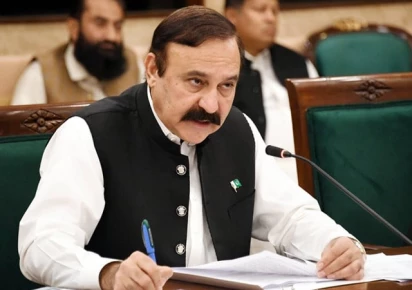
Imran Khan’s Health Under Spotlight: Tariq Fazal Responds to Growing Concerns
tions that authorities had neglected Khan’s healthcare while he remained imprisoned at Adiala Jail in Rawalpindi. He assured that the government would continue providing medical facilities and would not tolerate negligence in the future.
His statement comes amid renewed concerns about Khan’s medical condition, particularly following reports of elevated blood pressure and earlier complications involving his eyesight.
Government Says Imran Khan Has Received Medical Attention
Addressing questions about the former prime minister’s health, Tariq Fazal Chaudhry maintained that the government had taken necessary steps to ensure Khan received medical attention whenever required.
According to the minister, Khan had been taken to hospital six times for medical examinations even before the Supreme Court issued specific directions concerning his treatment.
Chaudhry also claimed that doctors had been called, including a specialist from London, whenever medical concerns related to Khan’s blood pressure emerged.
He further referred to comments made by Khan’s lawyer, Barrister Salman Safdar, suggesting that medical examination facilities were available to the PTI founder.
The minister insisted that political differences should not prevent authorities from fulfilling their responsibility to provide appropriate healthcare to a former head of government.
Blood Pressure Concerns Renew Questions About His Health
The latest controversy emerged after Khan reportedly informed his lawyer during a meeting at Adiala Jail on November 2 that his blood pressure had reached 192.
The reported reading raised concerns about possible complications, including the risk of a brain haemorrhage, and renewed calls for a detailed medical assessment.
The PTI leadership and supporters have continued demanding that authorities ensure proper medical supervision and implement the Supreme Court’s directions regarding his treatment.
The party has also expressed concerns about access to personal physicians and the need for medical examinations without unnecessary delays.
These developments have turned Khan’s healthcare into a significant political and humanitarian issue, with opposition figures questioning whether existing medical arrangements are sufficient.
Supreme Court Order and Dispute Over Hospital Transfer
The disagreement over Khan’s medical care is also connected to an earlier Supreme Court directive issued on August 18, 2026.
The court had ordered authorities to transfer the former prime minister to Shifa International Hospital in Islamabad within two days for medical examination and treatment.
However, Khan was subsequently taken to the Pakistan Institute of Medical Sciences (PIMS), a government-run hospital, before being returned to Adiala Jail. Government officials said the examination was conducted by qualified specialists and that he was declared medically fit.
The PTI and Khan’s family have questioned the implementation of the court’s instructions, particularly regarding the designated hospital and access to his personal medical team.
The dispute has also become complicated by a jurisdictional disagreement between the Supreme Court and the Federal Constitutional Court, which has delayed further proceedings in the matter.
Imran Khan’s Sister Seeks Urgent Court Intervention
The latest developments have also prompted Khan’s sister, Dr Uzma Khan, to approach the Supreme Court again.
isclosed that Khan had reported only 15 per cent vision in his right eye.
The findings prompted further concern among PTI leaders and supporters, who demanded access to his personal physicians.
Following the report, the Supreme Court directed authorities to facilitate access to Khan’s personal doctors while he remained in custody.
The government, however, has repeatedly maintained that necessary medical treatment has been provided and that doctors have examined him whenever required.
Tariq Fazal Also Comments on Khyber Pakhtunkhwa Emergency
Apart from Imran Khan’s medical condition, Chaudhry also discussed the political and security situation in Khyber Pakhtunkhwa.
The minister criticised the PTI-led provincial government, accusing it of failing to deliver development and cooperate effectively with the federal government and security institutions in addressing terrorism.
He described the imposition of an emergency in the province as a last-resort measure and argued that the decision was necessary to
Chaudhry further stated that the emergency would remain in place until the required objectives had been achieved.
His remarks reflected the continuing political differences between the federal government and the PTI leadership, particularly over provincial governance, security policy and political confrontation.
No Political Deal Under Consideration, Says Minister
Chaudhry also rejected speculation about a possible political arrangement that could lead to Khan’s release.
He maintained that there was no deal or special relaxation being considered for the imprisoned PTI founder.
According to the minister, Khan’s release would have to come through legal proceedings rather than political negotiations.
The statement comes as political tensions between the government and PTI remain high, with disagreements extending beyond Khan’s imprisonment to governance, security and the implementation of judicial decisions.
Political and Humanitarian Debate Continues
The latest statements from Tariq Fazal Chaudhry have once again placed Imran Khan’s health at the centre of Pakistan’s political discussion.
While the government insists that medical facilities and specialist consultations have been arranged, PTI leaders and Khan’s family continue to demand stronger guarantees regarding his treatment, access to personal physicians and implementation of the Supreme Court’s directions.
The reported blood pressure reading, previous eyesight complications and continuing disagreement over his hospital transfer have made the issue increasingly significant.
Ultimately, the matter involves more than competing political statements. It raises questions about prisoners’ access to healthcare, the enforcement of judicial orders and the responsibility of authorities to ensure appropriate medical treatment.
As the Supreme Court is being asked to take up the matter urgently, attention will remain focused on whether the outstanding legal directions are implemented and whether Khan receives the medical assessment sought by his family and party.