
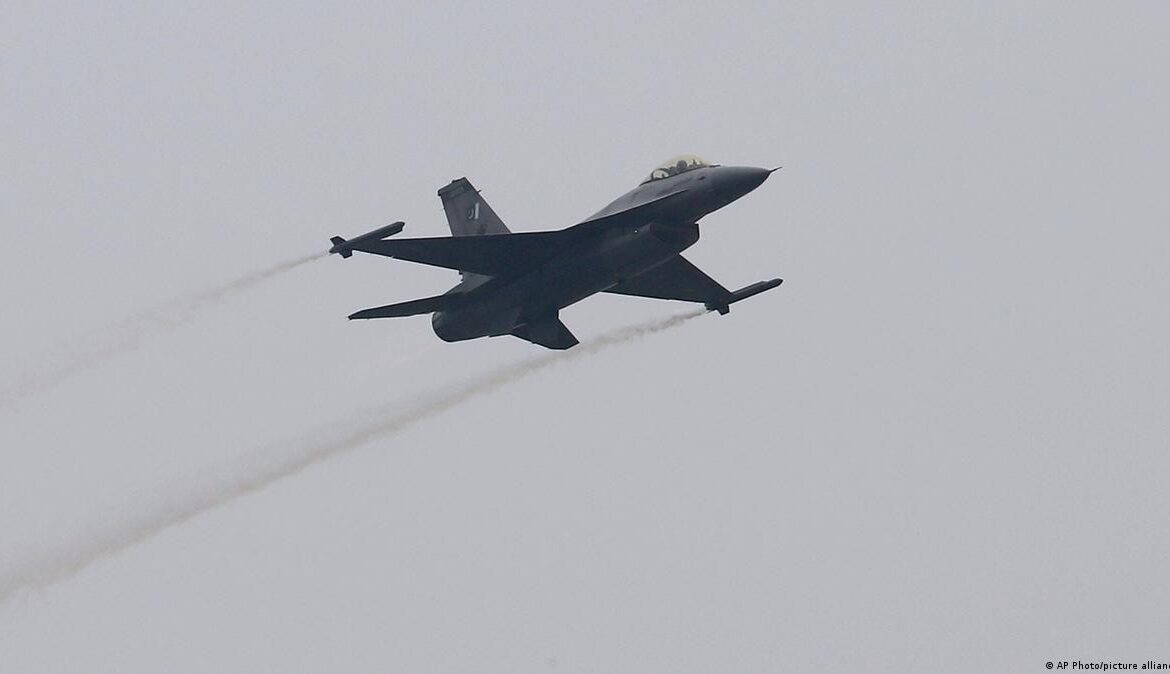
Pakistan Carries Out Calibrated Airstrikes Near Afghan Border After K-P Attacks
Pakistan has carried out what the government described as “calibrated” airstrikes against terrorist camps and hideouts in the border region with Afghanistan following a series of deadly attacks in Khyber-Pakhtunkhwa (K-P).
According to Pakistan’s Ministry of Information and Broadcasting, the strikes followed intelligence-based ground operations around Kohat, Hangu and Thal. The ministry said nine militants were killed during the ground operation, while 28 more were killed in subsequent strikes on three terrorist targets near the Afghan border.
The development comes days after a deadly attack at the Old Police Lines in Kohat, where a suicide bomber attacked a mosque during Friday prayers and armed attackers subsequently engaged security personnel. The incident resulted in multiple deaths and injuries.
Pakistan Airstrikes Follow Recent K-P Terrorist Attacks
The latest military action came after a series of attacks targeting security personnel and civilians in Khyber-Pakhtunkhwa.
Pakistan’s Information Ministry said the ground operation was conducted on September 20 in Kohat and Hangu districts based on intelligence about the presence of militants. According to the ministry, nine militants were killed during the engagement, while several others were injured.
The operation was followed by airstrikes against what Pakistan described as terrorist camps, hideouts and safe havens in the Afghanistan border region.
Three Terrorist Targets Destroyed
According to the Pakistani government, three targets were destroyed during the air operation. One of the locations was described as a training centre for suicide bombers.
The Ministry of Information said 28 militants, including several suicide bombers, were killed in the strikes. It also stated that large quantities of weapons and ammunition stored at the targeted locations were destroyed.
The reported figures from Pakistan put the combined number of militants killed during the ground operation and airstrikes at 37.
Pakistan Links Strikes to Terrorist Attacks in K-P
The Pakistani government said the operations were conducted in response to recent terrorist incidents in Khyber-Pakhtunkhwa.
The Kohat Police Lines attack was among the most serious incidents in the recent wave of violence. According to reports, the attack involved a suicide bomber and armed attackers, resulting in deaths among police personnel and civilians.
Pakistan has repeatedly raised concerns over militant groups allegedly operating from Afghanistan and carrying out attacks inside Pakistan. Islamabad has specifically accused groups including the Tehreek-e-Taliban Pakistan (TTP) and affiliated organisations of using bases across the border.
Afghanistan has denied allegations that its territory is being used to support attacks against Pakistan.
Afghan Authorities Report Civilian Casualties
While Pakistan said the strikes targeted terrorist facilities and that precautions were taken to prevent collateral damage, Afghan authorities reported civilian casualties.
According to an Associated Press report, Afghan officials said at least three civilians were killed and four others were wounded in strikes in Kunar and Paktika provinces. The reported locations included Nurgal district in Kunar and Barmal district in Paktika. The competing casualty claims had not been independently verified at the time of reporting.
The difference between the Pakistani and Afghan accounts highlights the continuing dispute between Islamabad and Kabul over cross-border military operations and militant activity.
Rising Pakistan-Afghanistan Security Tensions
The latest strikes mark another escalation in tensions along the Pakistan-Afghanistan border.
Pakistan has maintained that militant networks operating from Afghan territory pose a direct security threat to the country. Afghanistan, meanwhile, has rejected accusations that it provides safe havens for militants targeting Pakistan.
The recent escalation follows several deadly attacks in Khyber-Pakhtunkhwa, including the Kohat Police Lines attack and a subsequent clash in Hangu in which Pakistani security personnel were killed.
Pakistan Says Counterterrorism Campaign Will Continue
The Ministry of Information said Pakistan’s counterterrorism campaign, described as “Ghazab lil Haq” under the Azm-e-Istehkam framework, would continue.
The government said its objective is to address what it describes as foreign-sponsored and supported terrorism and to protect citizens from militant attacks.
Pakistan’s Permanent Representative to the United Nations, Asim Iftikhar Ahmad, has also said Islamabad would respond in self-defence to terrorism emanating from Afghanistan when required.
What Happens Next?
The latest airstrikes could further affect already strained relations between Pakistan and Afghanistan. Any additional attacks along the border, further military operations or diplomatic responses from Kabul and Islamabad could influence the security situation in the region.
For now, Pakistan says its operations targeted militant infrastructure responsible for recent attacks, while Afghan authorities have disputed aspects of the Pakistani account and reported civilian casualties.
The situation remains developing, and casualty figures and official statements may change as further information becomes available.