
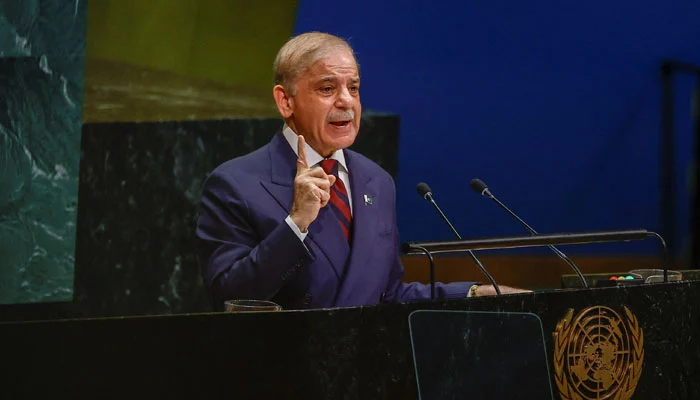
PM Shehbaz Sharif Inaugurates Pakistan-China Friendship Hospital & Orders Free Treatment
Pakistan-China Friendship Hospital has officially been inaugurated by Prime Minister Shehbaz Sharif in Islamabad, marking a significant development in the country’s public healthcare sector. The prime minister has directed authorities to provide completely free medical treatment to patients, ensuring that financial difficulties do not prevent people from accessing quality healthcare.
The inauguration took place on October 29, 2026, at the newly renovated hospital in Chak Shahzad, Islamabad. During the ceremony, PM Shehbaz Sharif announced that the federal government would bear 100 percent of patients’ treatment expenses. The facility will operate under a public-private partnership, with the Indus Hospital and Health Network (IHHN) responsible for professional management.
The initiative aims to improve healthcare facilities in the federal capital and provide medical assistance to patients arriving from different parts of Pakistan.
Pakistan-China Friendship Hospital to Provide Free Healthcare
Addressing the inauguration ceremony, Prime Minister Shehbaz Sharif emphasized that providing affordable and accessible healthcare is a fundamental responsibility of the government. He directed the relevant authorities to ensure that every patient receives quality medical services without facing financial pressure.
The prime minister stated that the government would cover the complete cost of medical treatment at the hospital. This arrangement is expected to provide considerable relief to low-income families who struggle to afford expensive healthcare services.
He also stressed that public resources should be utilized effectively to serve humanity rather than being wasted because of administrative negligence or institutional mismanagement.
According to the prime minister, the hospital should become a model healthcare institution that demonstrates how public-private partnerships can improve service delivery in Pakistan.
China-Gifted Hospital Revived After Years of Closure
The Pakistan-China Friendship Hospital has an important history connected to the strong relationship between Pakistan and China.
Originally established as the Isolation Hospital and Infectious Treatment Centre (IHITC), the facility was gifted to Pakistan by the Chinese government during the COVID-19 pandemic. It played an important role in supporting Pakistan’s healthcare response during the global health emergency.
However, after the pandemic subsided, the hospital became non-operational and remained closed for several years. Its prolonged closure meant that an important healthcare facility could not serve patients despite the country’s growing medical needs.
Prime Minister Shehbaz Sharif expressed regret over the situation and described the hospital’s closure as an unfortunate example of institutional neglect.
He revealed that he had taken immediate notice of the issue after learning about the hospital’s condition through a newspaper report. Following this, he contacted Federal Health Minister Syed Mustafa Kamal and instructed him to take urgent measures to restore the facility.
The prime minister also apologized to the Chinese ambassador and the people of China for the years during which the hospital remained unused.
He acknowledged China’s generous contribution and highlighted the importance of protecting facilities provided through international cooperation.
Hospital Equipped With 182 Beds and 50 ICU Beds
The newly revamped Pakistan-China Friendship Hospital has a total capacity of 182 beds, including 50 intensive care unit (ICU) beds.
The facility is expected to strengthen healthcare services in Islamabad and surrounding regions by providing medical treatment to patients who require specialized attention and hospital care.
Its location in Chak Shahzad makes it an important healthcare resource for residents of the federal capital and neighbouring areas.
The hospital is also expected to serve patients travelling from:
- Islamabad and Rawalpindi
- Khyber Pakhtunkhwa
- Gilgit-Baltistan
- Azad Jammu and Kashmir
- Other parts of Pakistan
With its upgraded infrastructure and expanded medical facilities, the hospital aims to reduce pressure on existing public-sector hospitals.
The availability of free treatment is particularly important for patients who travel long distances to Islamabad for medical assistance but cannot afford expensive private healthcare.
Indus Hospital to Manage Facility Under Public-Private Partnership
One of the major features of the project is its management arrangement with the Indus Hospital and Health Network.
Under the new system, the government will finance patient treatment, while Indus Hospital and Health Network will provide professional management and medical expertise.
The public-private partnership model is designed to combine government financial support with experienced healthcare management.
Prime Minister Shehbaz Sharif expressed confidence in the organization’s ability to operate the hospital efficiently. He referred to his previous experience with healthcare facilities managed by the network and appreciated its contribution to improving medical services.
The prime minister also highlighted the importance of accountability, professional management and efficient use of public resources.
He directed Health Minister Syed Mustafa Kamal and hospital management to ensure that patients receive quality treatment and that the facility maintains high operational standards.
Furthermore, he called for a third-party performance audit to evaluate the hospital’s services and ensure transparency in its operations.
The audit is expected to help assess the quality of healthcare delivery and identify areas requiring improvement.
Chinese Ambassador Welcomes Hospital’s Revival
Chinese Ambassador to Pakistan Jiang Zaidong welcomed the inauguration of the Pakistan-China Friendship Hospital and appreciated the efforts made to restore the facility.
He expressed satisfaction that the hospital had been transformed from an isolation centre into a general healthcare institution capable of serving patients.
The ambassador also appreciated the decision to name the facility Pakistan-China Friendship Hospital, describing it as a reflection of the longstanding friendship between the two countries.
China’s contribution to the hospital represents another example of cooperation between Islamabad and Beijing beyond traditional diplomatic and economic relations.
The project highlights how bilateral partnerships can contribute directly to public welfare and improve essential services for ordinary citizens.
Federal Health Minister Syed Mustafa Kamal also thanked the prime minister for his personal involvement in restoring the hospital.
He highlighted the increasing demand for healthcare services in Islamabad and explained that the growing population has placed additional pressure on existing medical facilities.
Government Highlights Additional Healthcare Projects
During the inauguration ceremony, the prime minister also discussed other developments in Pakistan’s healthcare sector.
He informed participants that a 200-bed cancer hospital at the Pakistan Institute of Medical Sciences (PIMS) had been prepared and was expected to become operational next year.
The proposed cancer hospital is expected to strengthen specialized medical services and provide additional treatment opportunities for cancer patients.
Health Minister Syed Mustafa Kamal also highlighted improvements in public healthcare infrastructure, including the addition of hospital beds and the expansion of healthcare initiatives.
He noted that the restoration of the Prime Minister’s Sehat Card had helped expand access to medical services, with additional private hospitals joining the programme.
These developments are part of broader efforts to improve healthcare accessibility and strengthen medical infrastructure across the country.
Pakistan-China Friendship Hospital: A New Step Towards Accessible Healthcare
The inauguration of the Pakistan-China Friendship Hospital represents an important step towards improving public healthcare services in Pakistan.
By ensuring that the government covers treatment expenses and assigning professional management to the Indus Hospital and Health Network, the initiative aims to address two major challenges facing the country’s healthcare system: affordability and service quality.
For patients from Islamabad, Rawalpindi and other regions, the facility could provide valuable medical support without the financial burden associated with private hospitals.
However, the project’s long-term success will depend on consistent government funding, effective administration, qualified medical staff and transparent monitoring of healthcare standards.
The government’s decision to introduce third-party performance audits is therefore an important measure for maintaining accountability.
The hospital’s revival also carries diplomatic significance, as it restores a facility originally gifted by China and recognizes the contribution of the Chinese government and people.
With its 182-bed capacity, including 50 ICU beds, the Pakistan-China Friendship Hospital is expected to become an important addition to the country’s healthcare infrastructure.
Prime Minister Shehbaz Sharif’s directive to provide completely free treatment places public welfare at the centre of the project. If implemented effectively, the initiative could offer meaningful relief to thousands of patients and serve as an example for improving other public healthcare institutions in Pakistan.